What If the Leaders Best Equipped for the AI Era Aren’t Specialists at All?
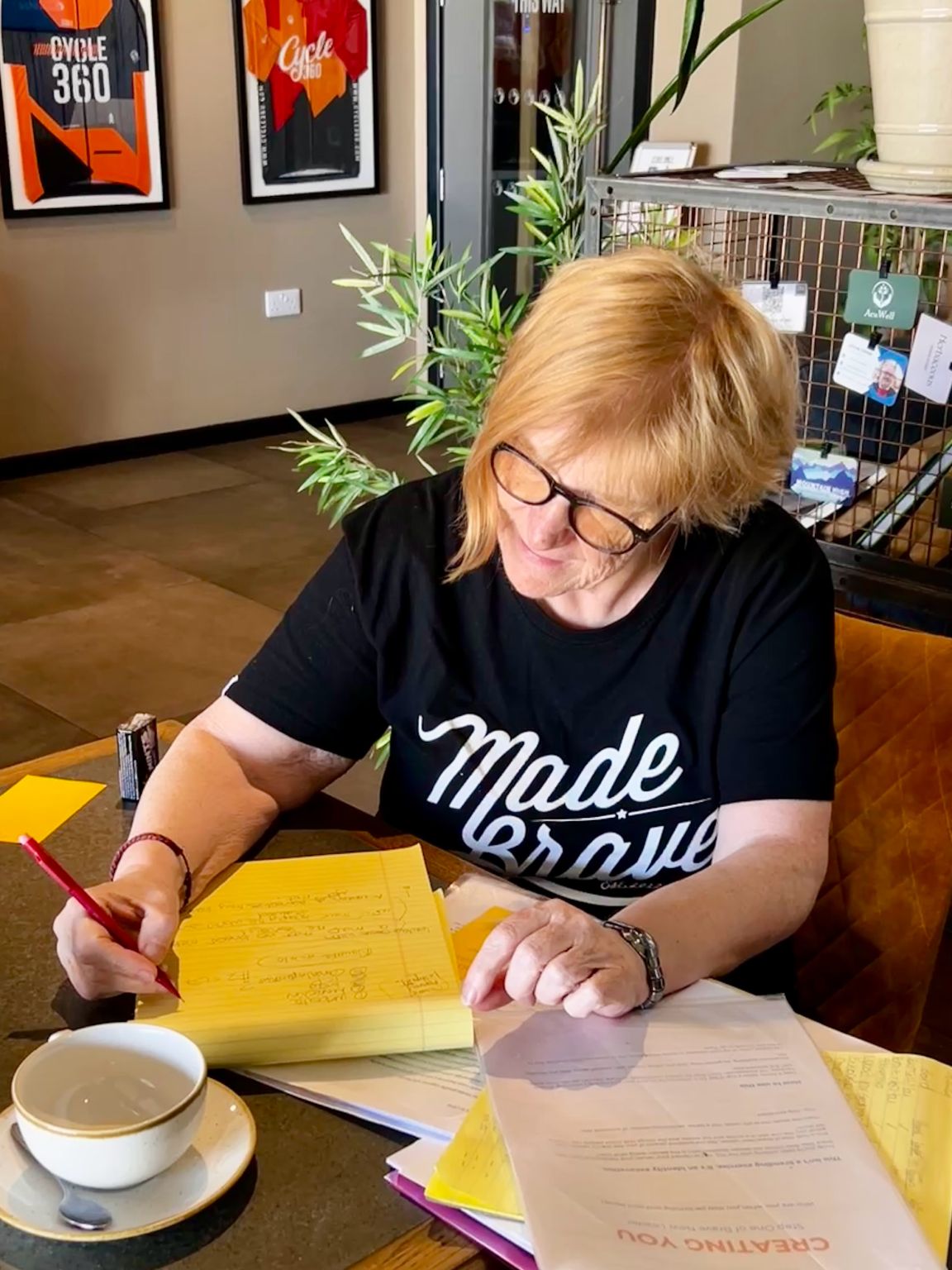
For much of my career, I have been a generalist.
I would probably go further. I am a super-generalist.
I have moved across sectors, disciplines, functions and problems. I have led in strategy, marketing, operations, tech, distribution, transformation, tourism, retail, hospitality, government, leadership, education, motorsport, entrepreneurship and organisational change.
I have rarely stayed neatly inside the lines.
And I have disrupted things.
For years, I might have described those as two different characteristics. I am increasingly convinced they are not.
Perhaps I disrupt precisely because I am a generalist.
I see connections between things that other people have learned to keep separate. I bring something from one industry into another. I spot patterns. I ask the question that does not belong to the function. I challenge the assumption everyone else stopped noticing years ago.
Because my identity has never depended entirely on being the expert in one narrow domain, I am relatively comfortable walking towards something I do not yet know.
In an AI era, that may matter enormously.
The expert leadership model is being challenged
For decades, many senior careers followed a familiar pattern.
Become very good at something. Become the recognised expert. Get promoted because of that expertise. Eventually, lead the people who do what you once did.
The implicit equation was:
I know more, therefore I am valuable.
And sometimes:
I know more, therefore I should lead.
AI is beginning to break that equation apart.
Not because expertise suddenly does not matter. It does. But knowledge itself is becoming dramatically more accessible.
Analysis can be accelerated. Information can be synthesised. First drafts can be generated. Patterns can be found across datasets that no human could read in a lifetime.
So I think we need to be precise about what is becoming endangered.
Expertise itself is not endangered. Identity that depends upon expertise being scarce is.
That is a very different problem. And it is as much a leadership identity challenge as a technology challenge.
Generalist, expert or disruptor?
One piece of 2026 research particularly caught my attention.
A study based on interviews with 31 CEOs and managing directors identified three approaches to leading AI transformation: Generalist, Expert and Disruptive.
The generalists maintained strategic alignment while delegating execution. The experts became deeply involved in AI and embedded it into management and strategy. The disruptors saw AI as something more fundamental and were prepared to reposition the organisation around it.
Useful distinctions. But I found myself resisting them.
Because I do not see generalist and disruptor as opposites. Quite the reverse.
What if being a generalist is one of the things that makes disruption possible?
A deep specialist sees further down the tunnel. A super-generalist may be more likely to see the tunnels connecting.
Disruption frequently happens in the space between established disciplines, not at the centre of them.
The person who asks:
- Why do we do it like this?
- What happens if we connect these two things?
- Why could something that works over there not work here?
- What are we assuming is fixed that is not?
Those questions do not require ignorance of expertise. They require freedom from being trapped inside it.
I am not arguing for shallow generalism
This distinction matters.
The future leader is not someone who knows a little about everything and nothing about anything.
I call the more useful model the integrative expert: someone who has enough depth to recognise quality but enough breadth to see the whole system.
They can move between expertise and context, technology and people, data and intuition, today’s operational reality and tomorrow’s possibility.
They do not abandon expertise. They stop allowing expertise to define the limits of who they can become.
That is a profound transition for someone who has spent 20 or 30 years being rewarded for knowing.
AI makes this more urgent
Work is already asking people to adapt faster and exercise capabilities once associated with more senior roles, including judgement, leadership and strategic thinking.
That does not look like the death of human capability to me. It looks like its elevation.
But it also creates a problem.
We are increasingly asking people to exercise judgement earlier while automating some of the work through which previous generations developed that judgement.
Which leads to one of the questions I think organisations should be asking urgently:
Are we automating the experiences that taught us how to use expertise wisely?
Judgement is not downloaded. It develops through experience, getting things wrong, awkward conversations, weak signals and decisions made with incomplete information.
It develops through discovering that the technically correct answer is not always the right answer.
AI can give us more intelligence. It cannot absolve us from deciding what to do with it.
This changes what leadership looks like
I have used a Conductor model in Brave New Leader® for some time. I like it even more now.
A great conductor does not need to be the best violinist in the orchestra. They do not grab the cello when the cellist struggles. They do not demonstrate their value by playing every instrument themselves.
Their contribution is different.
They hear the whole. They understand timing. They know when one voice needs to become louder and another quieter. They interpret, coordinate and create the conditions in which exceptional individual capability becomes extraordinary collective performance.
Now imagine the orchestra of the future: human intelligence, artificial intelligence, technical expertise, creativity, experience, curiosity, judgement, data, customers and different generations and perspectives.
The Brave New Leader® has to conduct all of it.
The leadership frontier is not knowing more. It is knowing how to bring the right intelligence to the right problem at the right moment.
That is Human Frontier Thinking™.
The part we should not overlook
People.
The leader of the future does not simply orchestrate intelligent systems. They develop human beings.
This may become more important precisely because AI can do more.
The leader has to create opportunities for people to think, struggle productively, question, experiment, exercise judgement, develop confidence and become more capable.
I keep returning to a line that sits at the heart of my leadership philosophy:
A leader is not measured primarily by what they know. They are measured by what they awaken in others.
AI makes that more important, not less.
Perhaps I have been preparing for this all my career
For years, being a super-generalist could sometimes feel like a slightly awkward professional identity.
What is your specialism? What box do you fit in? What exactly are you?
My answer was rarely neat.
Today, I am rather glad about that. Because the world we are entering is not neat either.
Its biggest problems do not respect functional boundaries. AI does not sit conveniently inside IT. Climate does not belong to sustainability. Culture does not belong to HR. Innovation does not belong to R&D. Strategy does not belong to the strategy department.
Leadership certainly does not belong to the person with the most impressive technical answer.
Increasingly, everything touches everything.
Our organisations need people who can see across boundaries, connect disparate intelligence, challenge inherited assumptions and co-create something that does not yet exist.
People who can go deep when depth matters and wide when the whole system needs to be seen.
People comfortable saying:
I do not need to be right. I need to learn and do it better in future.
Maybe that is the real superpower of the super-generalist.
Not knowing everything. Knowing that you never will.
And being endlessly curious about what becomes possible when you connect what you do know with the intelligence, experience and imagination of everyone, and everything, around you.
The future will not belong exclusively to experts. And it will not belong exclusively to generalists.
I suspect it will belong to the people capable of depth without being trapped by it, breadth without becoming shallow and disruption without losing sight of the humans who have to live with the consequences.
That is the frontier I am interested in.
The Human Frontier.
Research reference: Leading AI transformation: three approaches for CEOs.