Business Cannot Stand at the End of Education Waiting for Talent to Arrive
We talk a great deal about the disappearing career ladder.
AI is beginning to absorb many of the routine tasks traditionally given to graduates and junior employees. Those tasks were rarely glamorous, but they gave young people somewhere to start. They learned how organisations worked, watched experienced colleagues, made manageable mistakes and gradually acquired judgement.
But what if the problem is bigger than the loss of the first rung?
What if employers have gradually disengaged from the education system that once prepared them, and from their responsibility to create the opportunities through which young people become capable?
For too long, education and employment have been treated as separate systems.
Schools teach. Colleges qualify. Employers recruit.
Businesses then complain that young people are not “work-ready”, while often having had remarkably little involvement in the experiences that would make them so.
That separation was never ideal. In an AI world, it becomes dangerous.
Better work is not always better learning
Research involving 26,811 secondary pupils found that AI improved homework scores by 18% and reduced completion time by 30%.
Yet the same pupils performed 20% worse in unaided examinations.
The important distinction was how AI was used.
When AI produced the answer and removed the effort, learning suffered. Pupils who maintained a similar amount of working time experienced much smaller learning losses.
The question is no longer simply whether young people should use AI.
It is:
Are we using AI to improve the work or to improve the learner?
That question matters just as much in the workplace as it does in school.
If AI completes children’s homework and later removes the junior tasks through which they would have learned at work, young people face a double loss. They have fewer opportunities to develop capability in education and fewer places to convert knowledge into experience afterwards.
We could end up demanding greater judgement from young people while systematically removing the experiences through which judgement is formed.
Employers are not simply customers of education
Businesses often talk as though education is a supply chain. Young people enter at one end and should emerge at the other with the precise skills employers need.
But human capability is not a finished product that can be ordered to specification.
People become capable by encountering real problems, different adults, conflicting priorities, uncertainty and consequences. They need opportunities to contribute before they are fully formed, not only after they can prove their value.
Most experienced leaders were once given such an opportunity themselves.
Someone trusted them before they had a track record. Someone explained what was not written in the job description. Someone allowed them to sit in the room, attempt something difficult or recover from a mistake.
Those opportunities created today’s leaders.
There is an intergenerational responsibility here. Businesses and organisations cannot simply consume the capability that education produces. They must help replenish the conditions from which future capability grows.
That does not mean schools becoming servants of the economy. Education must continue to develop fulfilled individuals and active, compassionate citizens, not merely employees.
Nor does it mean handing curriculum design to whichever sector currently has the loudest voice.
It means recognising that learning is a shared social endeavour, and that employers possess people, knowledge, problems and environments that can make it more real.
What meaningful employer involvement could look like
This needs to go well beyond the occasional careers talk or one week of work experience.
Within the education system, employers could:
- bring real problems into classrooms for pupils to investigate
- contribute live briefs requiring research, creativity and teamwork
- provide feedback without turning every project into a recruitment exercise
- offer mentors, role models and access to workplaces
- expose educators to how technology, organisations and jobs are changing
- work with Eduvators to connect knowledge with real application
- involve charities, public services, the arts and community organisations, not only conventional businesses
Outside formal education, organisations could:
- preserve meaningful entry routes as AI removes routine tasks
- create paid projects, internships, apprenticeships and short placements
- allow young people to observe decisions, not merely activity
- form shared apprenticeship and graduate schemes where individual employers cannot carry the burden alone
- give young people real responsibility with appropriate support
- recruit for potential and learning agility, rather than experience they have never been given the chance to acquire
This is not a call for employers to create artificial jobs or preserve inefficient work.
It is a call to redesign the developmental journey.
If AI can now complete the basic task, the answer is not to eliminate the learner. It is to move the learner closer to the conversation, the customer, the problem and the decision while creating new forms of supported practice.
Small businesses cannot do this alone
We should be honest about capacity.
Many employers are small. They may want to engage but lack the time to navigate safeguarding, school timetables, placement administration and numerous points of contact.
A better system would make participation easy.
There could be one framework through which employers offer:
- an hour of expertise
- a workplace visit
- a real-world project
- a mentor
- a short placement
- an apprenticeship
- an entry-level opportunity
Schools and colleges would remain responsible for educational quality. A coordinating organisation could manage safeguarding, matching, preparation and evaluation. Employers could contribute at a level proportionate to their size and capacity.
The purpose would not be to generate impressive activity numbers.
It would be to create repeated, meaningful encounters through which young people develop understanding, confidence, networks and agency.
What could the Isle of Man exemplify?
This is where the Isle of Man could do something genuinely distinctive.
Our size is often described as a limitation. Here, it could be our advantage.
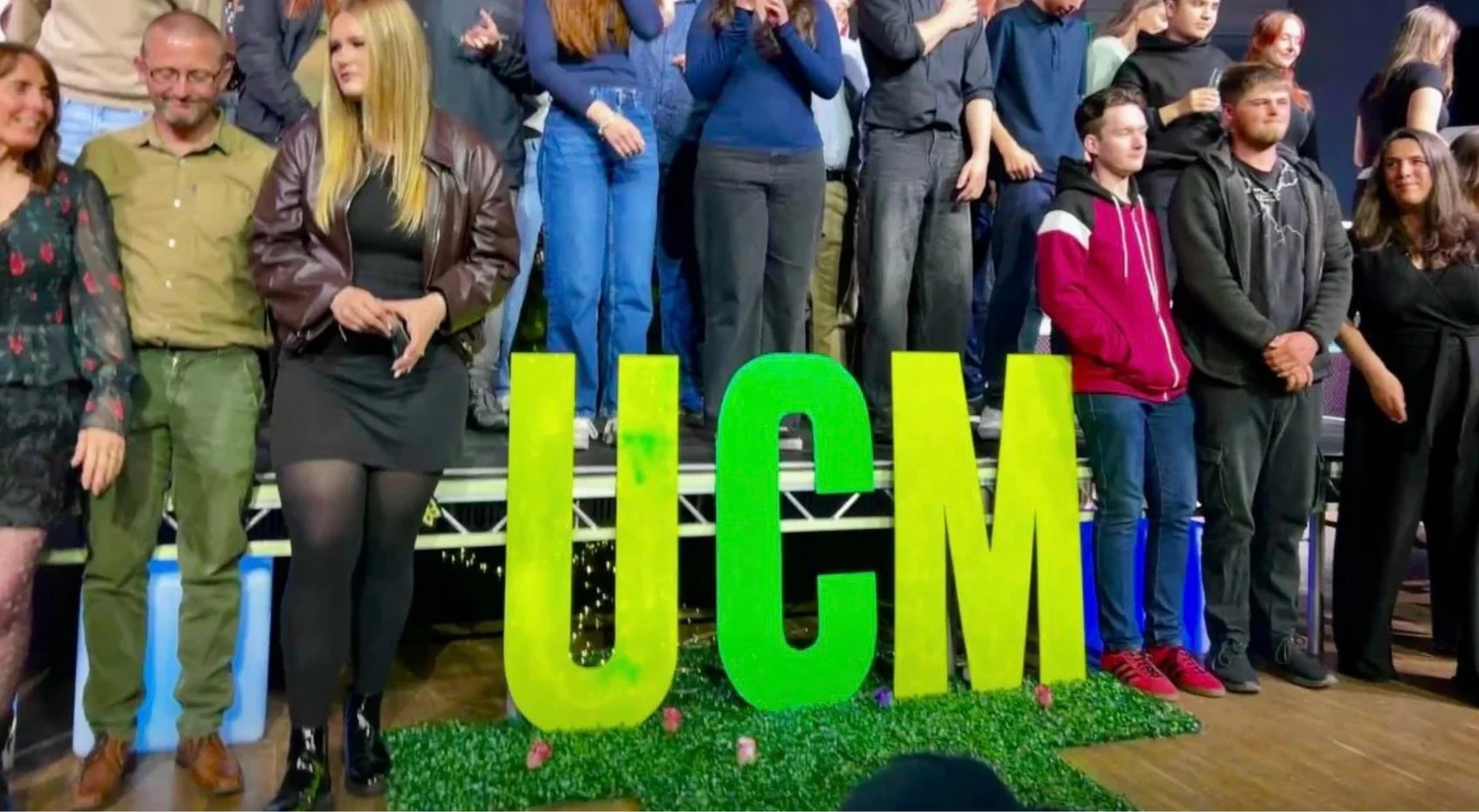
We have the potential to connect primary schools, secondary schools, UCM, employers, government and community organisations around every learner. We can identify where pathways break down, test ideas quickly and follow young people’s journeys over time.
The Isle of Man could become a living Human + AI Learning Lab, discovering which learning should remain human-led, where AI can act as a tutor and where HI:AI collaboration best prepares young people for future life and work.
Alongside that, we could establish an Island Opportunity Compact: a shared commitment that every young person will encounter real people, workplaces and problems throughout their education.
Not one careers week at the end of school, but a developing sequence from primary education onwards:
- awareness of the world beyond school
- encounters with different people and possibilities
- real-world projects
- mentoring and workplace experience
- multiple pathways into further learning, enterprise and employment
- continued opportunities to learn once in work
A single Island-wide framework could allow employers to contribute at different levels while removing unnecessary complexity. Shared apprenticeship and graduate schemes could make participation possible for smaller businesses. Eduvators could work across the boundaries between schools, organisations and communities, turning real challenges into powerful learning experiences.
We could ask every substantial employer and public body one simple question:
What opportunities are you creating for young people to become capable, not just to demonstrate that they already are?
We should then measure the answers: who participates, who benefits, which young people remain excluded and whether these experiences lead to stronger learning and better destinations.
This would not be another isolated skills initiative. It would be the beginning of a connected learning ecosystem in which schools, UCM, employers and the wider community share responsibility for developing human capability.
A shared responsibility for the next generation
Schools cannot prepare young people for a changing world while remaining isolated from it.
Businesses cannot remove entry-level work, disengage from education and then complain that young people lack experience.
Government cannot solve the problem through another skills strategy written by one part of the system for another.
We need to reconnect learning, work and contribution.
The career ladder may indeed be changing. But the deeper issue is whether today’s institutions are still willing to hold the ladder for those coming behind them.
The Isle of Man has an opportunity to show what a small learning nation can do: not treating young people as a future supply of labour, but surrounding them with the experiences, relationships and opportunities through which their potential can emerge.
Because young people do not become ready and then receive an opportunity.
Very often, it is the opportunity that makes them ready.
Inspired by “Does AI stop children from learning?” in The Economist. The underlying research is available from CEPR: The Generative AI Learning Penalty.